Mostafa Anwari
anwari.works@gmail.com · github.com/Bamyani1 · linkedin.com/in/manwari26 · www.manwari.com · Fairborn, OH (open to relocation)
Computer Science and Data Analytics double major who builds the system and then runs the analysis on what it produces. Turns an owner's stated needs into working site and data requirements, and ships the result end to end rather than handing off a spec.
Ohio Wesleyan University — B.A. Computer Science & Data Analytics (double major), Fall 2022 – May 2026
Lewis Pogue Artisan Chocolate Co. — Web Development & Data Analytics, 2024 — Present
End-to-end data pipelines: sales and inventory collected from multiple sources and formats, cleaned and consolidated into one central dataset. Models for production planning, growth planning and sales analysis, plus demand, ETA and reorder estimates across 60+ SKUs in 8 categories. Maintains the live Shopify store and works across Square point-of-sale and Faire integrations.
The Transcript Archive — 2025 — Present
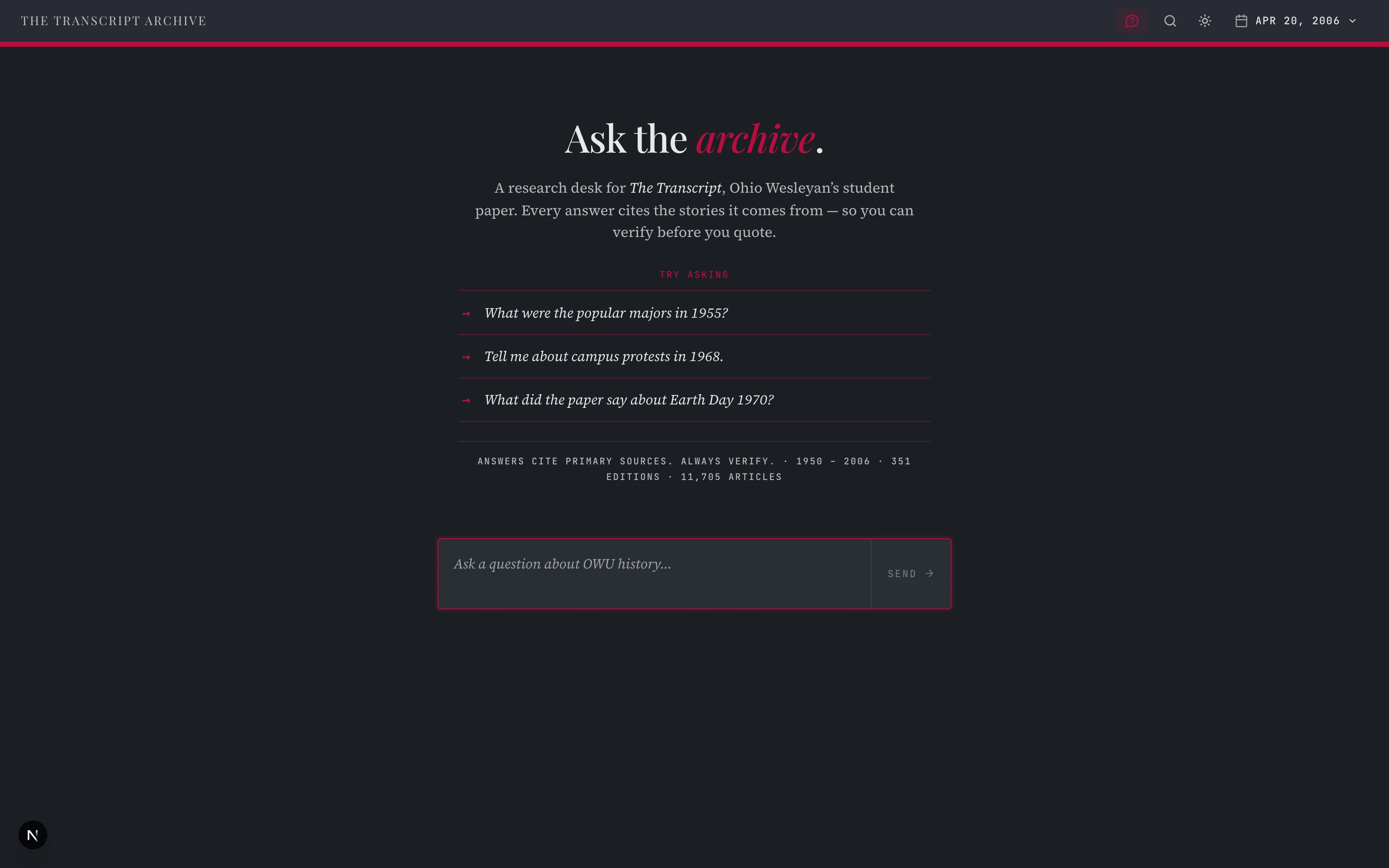
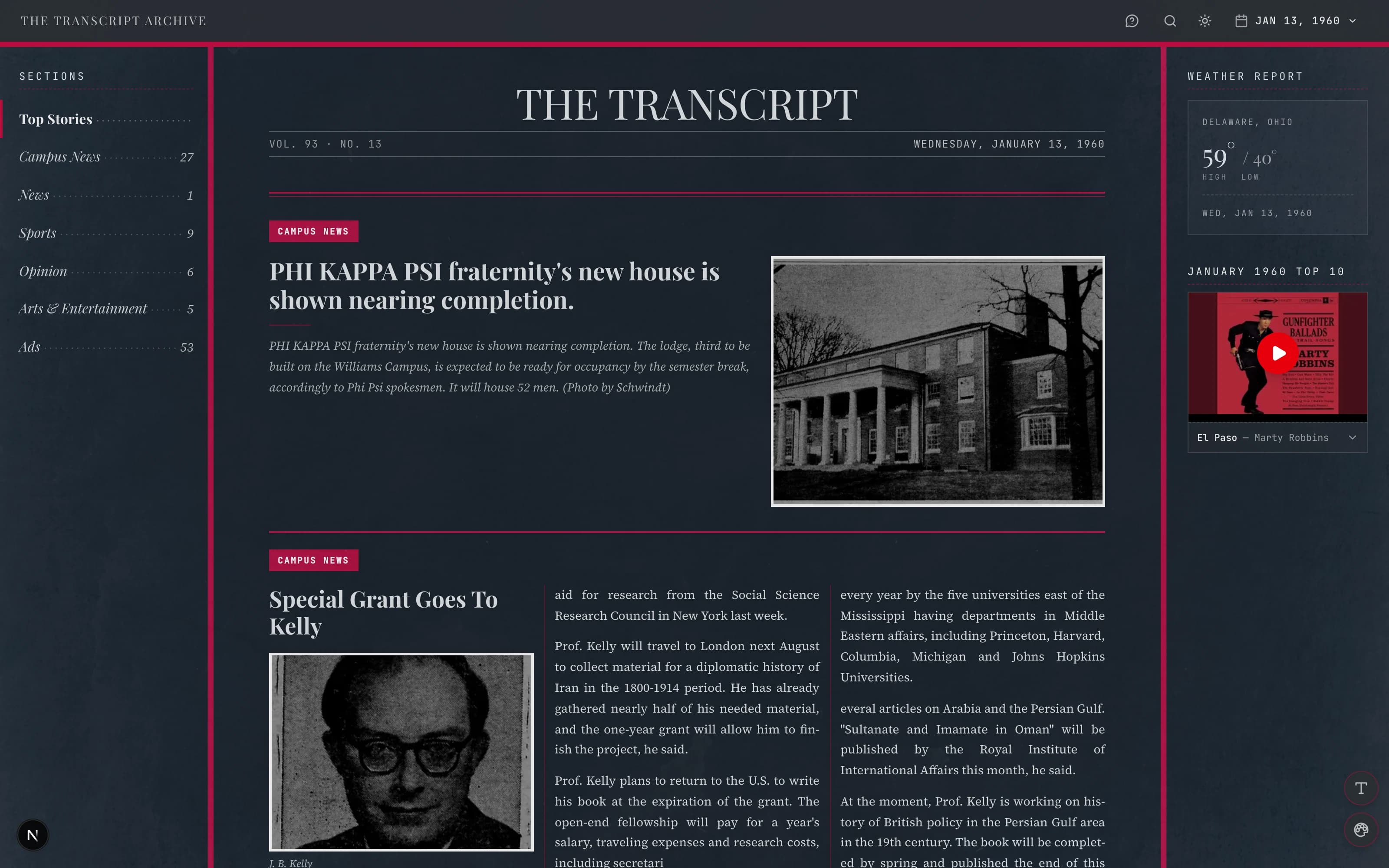
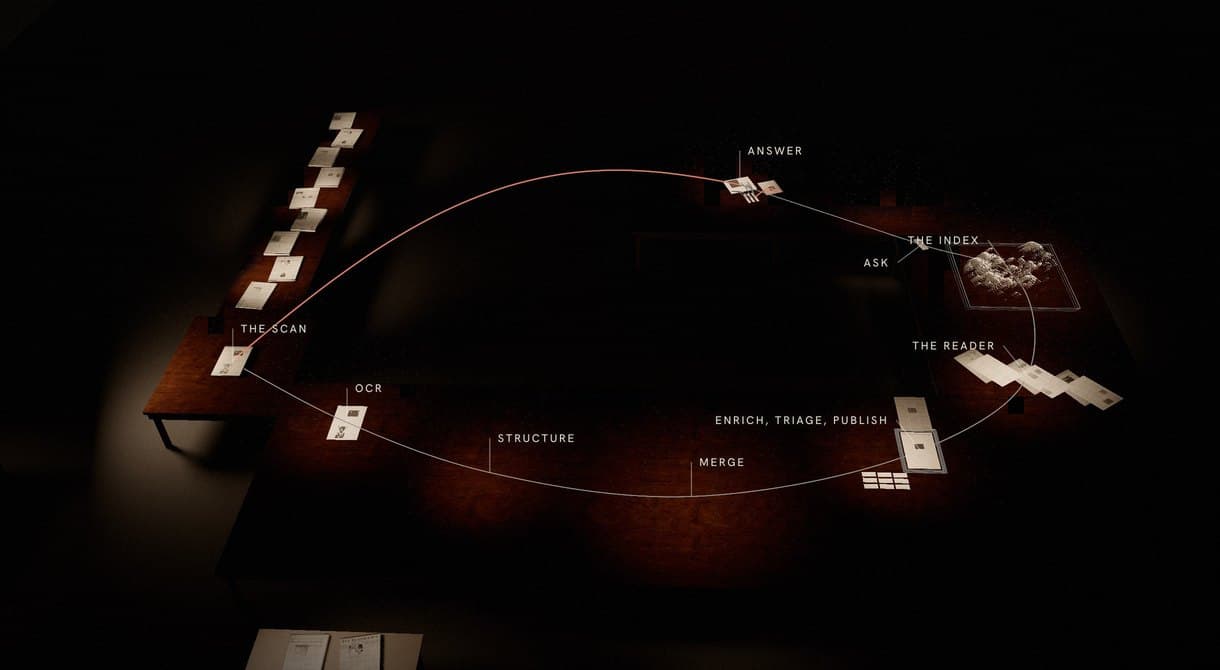
Production archive of Ohio Wesleyan's student newspaper, readable page by page and searchable through an Ask-the-Archive interface with cited sources. 7-phase Python ingestion pipeline (DocLayout-YOLO, Document AI, Gemini); Postgres retrieval with pgvector and full-text search fused by reciprocal rank fusion, a Gemini reranker and a grounded generator. Python · Neon Postgres · Next.js 16 · React 19 · TypeScript.
Flora Studio — Co-founder, 2025 — Present
Live, revenue-generating studio at floraohio.com; built and run end to end including booking, advertising and maintenance. 94 automated Vitest and Playwright tests in GitHub Actions CI, schemas typed with Zod, content publishing from an embedded Sanity Studio without a deploy.
Ohio Wesleyan Residential Life — Resident Assistant, 2024–2026
Overnight on-call authority for an 80-resident hall: rounds, emergency escalation to Public Safety and EMS, community-standards write-ups, and hall opening and closing each term. Mediated roommate and community conflicts.
Analysis & reporting — Excel, Google Sheets, Power BI, Tableau, QlikView; statistical and sales/inventory analysis, business and predictive modeling, demand and reorder estimation
Languages — SQL, R, Python, TypeScript, JavaScript, C++, C#, Java
Data — multi-source collection and consolidation, Python ingestion pipelines, PostgreSQL schema design (pgvector + tsvector), BigQuery, Snowflake, Google Cloud (Gemini, Document AI)
Commerce — Shopify, Squarespace, Square (payments/POS, Square Online), Faire integrations
Delivery — Git, GitHub Actions, Vitest, Playwright, Linux, Docker, REST APIs, FastAPI
Leadership — President, Rock Climbing Club; Public Relations, Computer Science Club; Media Manager, Horizons International